

 See My Latest Article on HelloNation
What Does It Mean to Soundproof a Floor?
Soundproofing a floor means reducing the amount of sound that travels between rooms or levels of a home. The goal may be to limit footsteps, voices, television noise, plumbing sounds, or vibrations from appliances.
Perfect silence is rarely realistic, especially in older homes or buildings with lightweight framing. A more practical goal is to reduce the loudness, sharpness, and vibration of everyday sounds by improving the floor assembly.
Two types of noise matter most:
- Airborne noise: Voices, music, television, and barking travel through the air and pass through gaps or thin building materials.
- Impact noise: Footsteps, dropped objects, furniture movement, and children playing create vibrations when they strike the floor.
Different problems require different solutions. A thick underlayment may help with footsteps but do little for loud voices. Sealing gaps may reduce airborne sound but will not fully stop vibration from heavy walking.
Why Do Some Floors Transmit So Much Sound?
Floors transmit sound when they are lightweight, rigidly connected, poorly sealed, or lacking enough mass and insulation. Wood-framed floors are especially prone to impact noise because sound vibrations can travel through joists, subflooring, ceilings, walls, and nearby framing.
Common causes include:
- Bare hardwood or laminate installed without an acoustic underlayment
- Floating floors that were installed incorrectly or allowed to touch walls
- Floorboards, stair parts, or subfloors that squeak
- Uninsulated joist cavities beneath a room
- Recessed lights, plumbing openings, ducts, or electrical penetrations
- Gaps around baseboards and trim
- A finished ceiling below that is attached directly to the floor framing
- Hard surfaces that reflect sound rather than absorbing it
In Salem, NH, seasonal changes can also affect wood flooring. Heating during cold weather lowers indoor humidity, while summer moisture can cause materials to expand. These cycles may create small gaps, movement, or squeaks that make a floor seem noisier over time.
What Is the Easiest Way to Reduce Footstep Noise?
The simplest approach is to add a soft, dense surface between the floor and the room. Area rugs with properly sized pads can noticeably reduce footfall noise, chair movement, and dropped-object sounds without changing the floor structure.
Rugs work best in rooms where noise is most noticeable, such as bedrooms, play areas, hallways, and rooms located above living spaces. A dense pad generally performs better than a very thin cushion because it absorbs more impact and helps keep the rug from sliding.
Other low-disruption measures include:
- Adding felt or rubber pads under furniture legs
- Using runners in hallways and stair approaches
- Removing hard furniture casters that roll directly on wood or resilient flooring
- Closing doors between noisy and quiet areas
- Placing exercise equipment on a dense protective mat
- Avoiding dragging furniture across hard floors
These steps reduce sound at the point of impact. They will not fully block voices or music, but they are useful when the main complaint is footsteps or movement.
Can Underlayment Make a Floor Quieter?
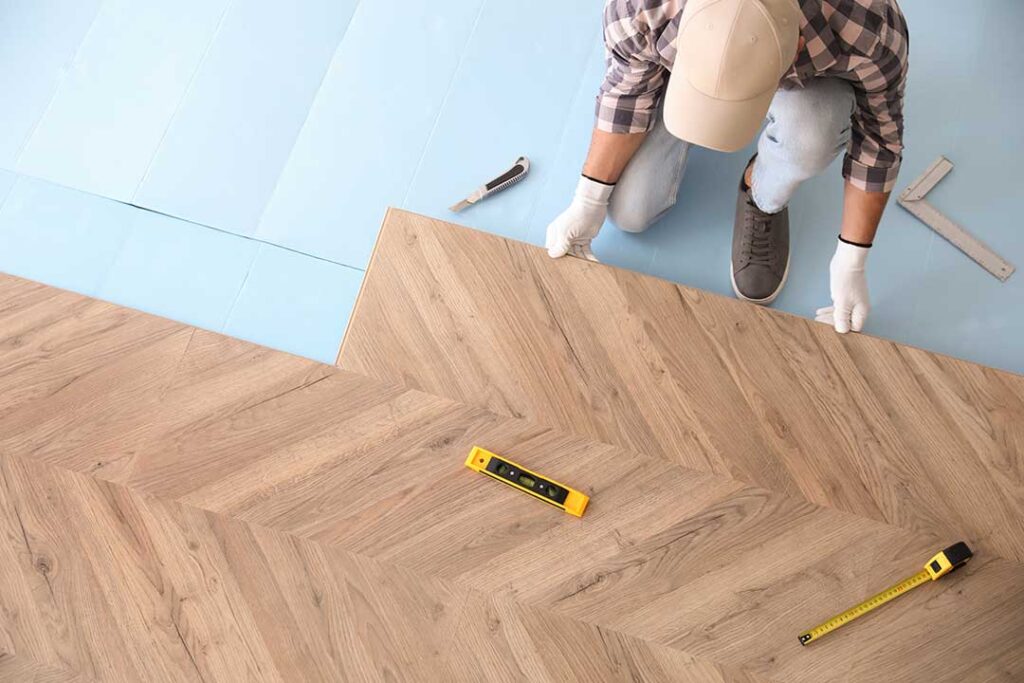
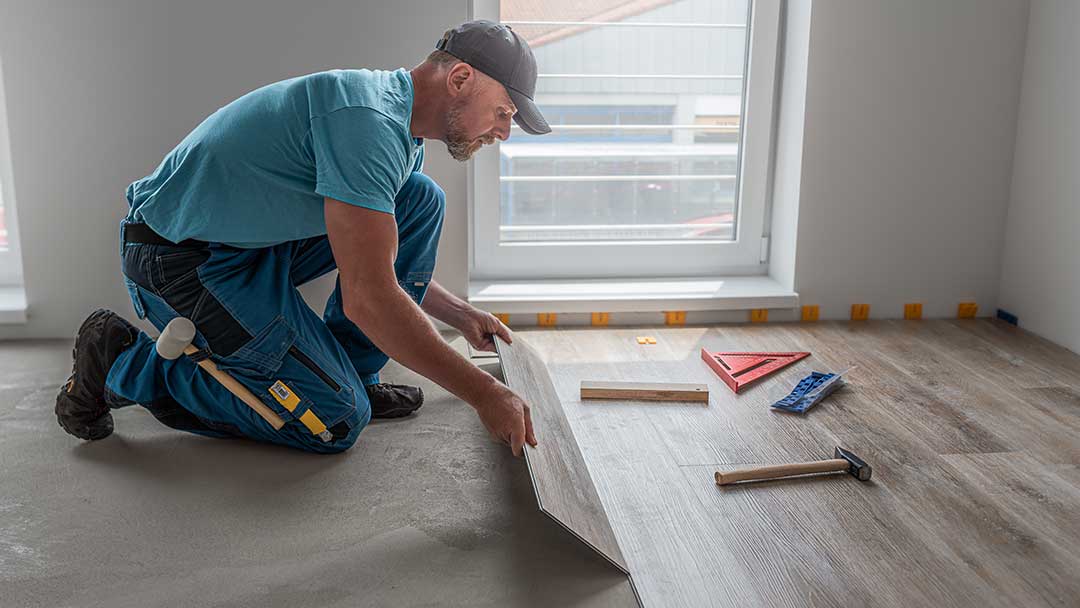
Yes. Underlayment can reduce impact noise, but its performance depends on the flooring material, installation method, and construction below. Underlayment is placed beneath a finished floor and creates a separation layer that limits some vibration.
It is commonly used beneath:
- Laminate flooring
- Engineered wood
- Luxury vinyl plank
- Floating wood floors
- Some carpet systems
The correct product must be compatible with the floor covering. Too much cushioning beneath a rigid floor can cause movement, joint separation, or damaged locking edges. Underlayment also cannot correct an uneven subfloor, eliminate squeaks caused by loose framing, or replace insulation in open joist cavities.
A useful distinction is that many underlayments are marketed for impact sound, while fewer provide meaningful control of airborne sound. Product claims should be interpreted carefully, especially when the existing floor and ceiling assembly are unknown.
How Can a Floor Be Soundproofed from Below?
Working from the room beneath the noisy floor often provides more control than treating the finished surface above. The usual strategy is to fill the spaces between joists, reduce rigid connections, and add mass to the underside of the assembly.
A typical approach may include:
1. Installing sound-absorbing insulation between floor joists.
2. Adding a resilient separation layer below the joists where appropriate.
3. Installing multiple layers of dense ceiling board with carefully sealed joints.
4. Sealing openings around pipes, wires, ducts, and light fixtures.
5. Avoiding rigid bridges that reconnect the ceiling directly to the framing.
Insulation in the joist cavities helps absorb airborne sound, but it does not stop impact vibration by itself. A ceiling attached directly to the joists may still transmit footstep noise even when the cavities are filled.
Any work involving electrical wiring, recessed lighting, fire separation, or alterations to a basement or lower-level ceiling should be handled with attention to applicable building and fire-safety requirements. Older homes may contain concealed conditions that are not visible from the finished room.
Does Carpet Soundproof a Room?
Carpet usually reduces room noise and footstep noise better than hard flooring because its fibers and backing absorb some sound. It can make a room feel quieter, but it is not a complete sound barrier.
Carpet is most effective when installed with a suitable pad over a solid, well-prepared subfloor. A pad that is too soft may cause premature wear or unevenness, while a pad that is too thin may provide limited acoustic benefit.
Carpet does not prevent sound from traveling through joists, walls, ducts, or gaps. If a downstairs room still hears footsteps clearly, the floor-ceiling assembly may need treatment below rather than only a softer surface above.
How Should Squeaky Floors Be Addressed?
Squeaks usually indicate movement between flooring components, subflooring, joists, fasteners, or trim. They are not always a soundproofing problem, but correcting them can improve comfort and reduce sharp, repetitive noise.
Possible causes include:
- Loose nails or screws
- Subfloor panels rubbing against joists
- Gaps caused by seasonal movement
- Stair treads or risers shifting
- Floorboards rubbing against trim or adjacent boards
- Deflection caused by framing or subfloor conditions
The correct repair depends on whether the work is done from above or below. Randomly adding fasteners can damage flooring, strike utilities, or create new problems. Squeaks near stairs, bathrooms, kitchens, or walls may also involve framing or plumbing conditions that require closer inspection.
What Soundproofing Mistakes Should Be Avoided?
Several common approaches produce disappointing results:
- Using thin foam alone: It may provide limited cushioning but will not block substantial sound.
- Sealing only the visible edge: Sound can still pass through outlets, ducts, wall cavities, and ceiling penetrations.
- Assuming heavier flooring solves everything: Mass helps with airborne noise, but impact vibration may continue through the framing.
- Installing flooring tightly against walls: Floating floors need the required perimeter clearance so they do not transmit movement into walls.
- Ignoring the ceiling below: Treating only the upper floor may leave the main transmission path unchanged.
- Relying on acoustic ratings without context: Laboratory ratings do not always predict performance in a specific home.
- Blocking ventilation or access panels: Sound treatment should not create moisture, heating, plumbing, or maintenance problems.
Which Approach Makes Sense for a Local Home?
The best solution depends on the source of the noise, the floor construction, and whether the work can occur above, below, or only within the room. A rug and furniture pads may be enough for occasional impact noise. A new floor assembly with compatible underlayment may help during remodeling. Persistent noise between levels often requires attention to joist cavities, ceiling layers, perimeter gaps, and penetrations as a connected system.
For area households dealing with cold-weather heating, basement spaces, older wood framing, or mixed flooring materials, it is useful to observe the problem across different seasons. Note whether the noise is caused by walking, voices, appliances, plumbing, or squeaking. Identifying the sound source first prevents spending effort on a treatment aimed at the wrong type of noise.