

 See My Latest Article on HelloNation

Bedrooms benefit from flooring that feels comfortable underfoot, limits noise, supports healthy indoor conditions, and remains practical through years of daily use. For households in Salem, NH, the right choice also depends on winter moisture, heating patterns, insulation, room location, and how much maintenance the household wants to handle.
What flooring works best in a bedroom?
Carpet, engineered hardwood, luxury vinyl, laminate, and cork can all work well in bedrooms. The best option depends on whether comfort, quietness, easy cleaning, appearance, or moisture resistance is the highest priority.
A bedroom is usually a lower-impact area than a kitchen, entryway, or hallway. That allows more flexibility. Flooring does not need to be selected only for maximum durability; it should also suit the room’s temperature, sound levels, furniture, and everyday habits.
For many bedrooms, the most practical choices are:
- Carpet for warmth, softness, and sound reduction
- Engineered hardwood for a durable, finished appearance
- Luxury vinyl plank for easy care and resistance to occasional moisture
- Laminate for a wood-like look at a moderate cost
- Cork for resilience, warmth, and a quieter surface
Is carpet still a good choice for bedrooms?
Yes. Carpet remains one of the most comfortable bedroom flooring options because it provides warmth, cushioning, and sound absorption. These qualities can be especially useful in homes with bedrooms above living areas or in rooms with hardwood framing that carries footsteps and voices.
Carpet can also make a bedroom feel less drafty during colder months. A dense carpet with a quality pad usually feels warmer than a hard surface installed over a cool subfloor.
The main drawback is maintenance. Carpet fibers can hold dust, pet hair, and allergens if they are not vacuumed regularly. Spills may also be more difficult to remove than they would be from a hard surface. Lower-pile carpet is often easier to clean than very deep or shaggy styles, particularly in homes with pets.
A bedroom carpet should be evaluated by fiber type, pile density, backing, and pad quality rather than color alone. A dense, resilient surface generally performs better than a loosely constructed carpet that shows crushing around furniture.
Is hardwood suitable for bedrooms?
Hardwood is a strong bedroom choice when the goal is a long-lasting, natural-looking surface. It is relatively easy to sweep and clean, and it can be refinished if the surface develops wear over time.
Solid hardwood can perform well in bedrooms, but moisture and seasonal changes should still be considered. Homes in Salem experience cold winters, humid summer conditions, and tracked-in moisture during wet or snowy weather. Bedrooms that are far from exterior doors are less exposed, but indoor humidity can still affect wood movement.
Engineered hardwood is often more dimensionally stable than solid hardwood because it is built in layered construction. That can make it a practical option over certain subfloors or in rooms where seasonal moisture changes are a concern.
Hardwood is not as soft or quiet as carpet. Area rugs can add warmth and reduce sound while leaving the main floor visible. Rugs should have a breathable, flooring-safe pad and should be moved periodically so the surface can be inspected and cleaned.
Is luxury vinyl a good bedroom flooring option?
Luxury vinyl plank and tile are practical in bedrooms because they resist routine spills, clean easily, and are available in wood- and stone-like patterns. They are also less vulnerable to occasional moisture than many wood products.
This type of flooring can be useful in first-floor bedrooms, rooms near bathrooms, or spaces used by children and pets. It is also easier to maintain for people who prefer sweeping and damp cleaning rather than regular carpet care.
Luxury vinyl is not automatically warmer or quieter than other hard surfaces. Its comfort depends partly on the product’s construction, the underlayment, and the condition of the subfloor. A properly prepared, reasonably flat base is essential because irregularities may become visible or create movement underfoot.
For bedrooms, softer visual patterns and matte finishes often create a calmer appearance than highly glossy surfaces. Furniture pads can help prevent dents and scratches, while rugs can improve warmth and acoustic comfort.
What about laminate flooring?
Laminate can provide a wood-like appearance while offering good resistance to everyday scuffs and routine bedroom use. It is often considered for bedrooms because the space usually has less exposure to standing water than kitchens, laundry areas, or entry zones.
The principal concern is moisture at seams and edges. A spill should be wiped up promptly, and wet cleaning should be controlled rather than excessive. Laminate is also relatively hard underfoot and may sound louder than carpet or cork.
A quality underlayment can improve sound and comfort, but it cannot correct a damp or uneven subfloor. Before installation, the subfloor should be dry, clean, and adequately flat. This matters in older homes, where settling, previous flooring layers, or minor floor movement may affect the finished result.
Could cork work in a bedroom?
Cork is a less common but useful bedroom option. It has a naturally resilient surface, provides some warmth, and can reduce reflected sound. Its slight give may feel comfortable beside a bed or in a room where people stand while dressing.
Cork does require reasonable care. Finishes can wear in busy areas, and prolonged moisture exposure may cause problems. Direct sunlight can also affect appearance over time, depending on the product and finish.
Cork is most suitable for a dry bedroom with controlled indoor conditions. It can be a good fit for households that want something softer and quieter than traditional hard flooring without choosing wall-to-wall carpet.
How do seasonal conditions affect bedroom flooring?
Seasonal humidity and tracked-in moisture can influence flooring performance. Winter heating often dries indoor air, while summer humidity can increase moisture levels. Wood-based products respond to these changes by expanding and contracting slightly.
Useful precautions include:
- Keep indoor humidity reasonably consistent rather than allowing large seasonal swings.
- Use doormats near exterior entrances to reduce moisture and grit carried through the home.
- Wipe up spills promptly, especially near bedrooms with attached bathrooms.
- Avoid excessive water during cleaning.
- Leave appropriate expansion space around the edges of floating floors.
- Use protective pads beneath bed frames and other heavy furniture.
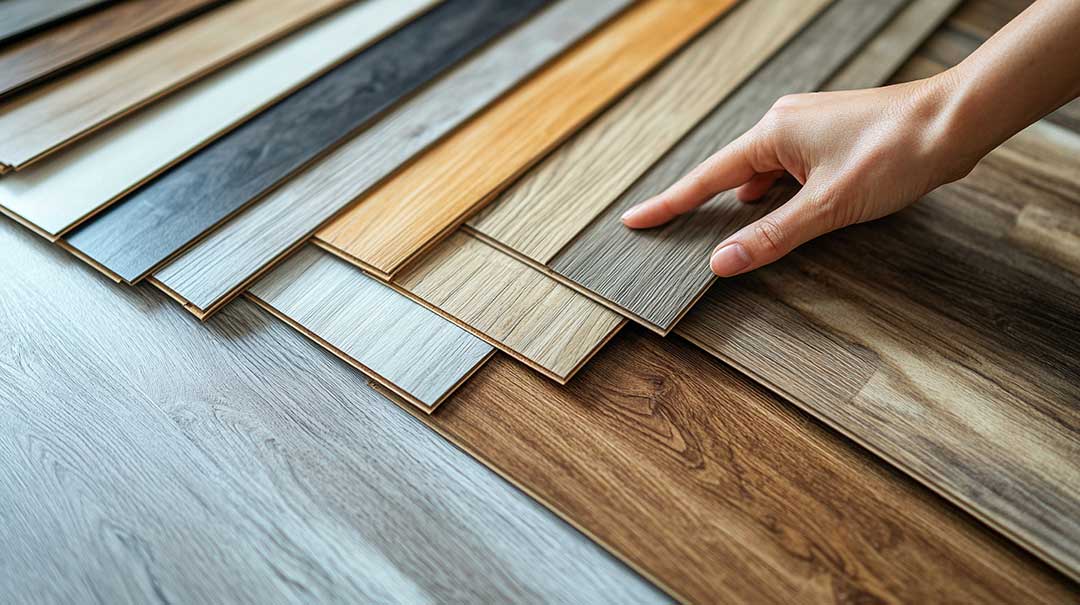
The location of the bedroom matters as well. A basement-level room may need more attention to moisture than a second-floor bedroom. A room over an unheated area may need a flooring and underlayment combination that improves comfort without trapping moisture.
Which bedroom flooring is easiest to maintain?
Hard surfaces are generally easier to inspect and clean, while carpet is better at hiding small amounts of dust between cleanings but requires more thorough maintenance.
For low-maintenance care, luxury vinyl and properly finished hardwood are usually straightforward options. Laminate is also manageable when cleaned with limited moisture. Carpet requires frequent vacuuming, periodic deeper cleaning, and prompt attention to stains.
No flooring is completely maintenance-free. Bed frames can trap dust, rugs can hide spills, and rolling furniture can cause wear on any surface. Cleaning habits and room use often affect longevity as much as the flooring material itself.
What should be checked before choosing bedroom flooring?
The existing subfloor is one of the most important factors. A surface may look attractive in a sample but perform poorly if the base is damp, uneven, loose, or contaminated by old adhesive.
Consider:
- Whether the room is above a basement, crawl space, garage, or heated living area
- How much sound travels between floors
- Whether anyone in the household has allergies or sensitivities
- The presence of pets, children, or mobility concerns
- Exposure to sunlight
- Door clearance and transitions to nearby rooms
- Whether the room needs added warmth beneath the feet
- How much cleaning and maintenance the household prefers
Older flooring may also contain materials that should not be disturbed without proper identification. If a renovation involves suspected hazardous materials, unusual moisture, structural movement, or electrical or heating concerns, specialized evaluation may be necessary for safety.
The most suitable bedroom floor is usually the one that balances comfort, sound, moisture tolerance, cleaning needs, and the condition of the home’s subfloor. A bedroom does not need the same flooring as every other room; its quieter, lower-impact use allows the selection to focus on how the space feels and functions every day.