

 See My Latest Article on HelloNation
Vinyl plank flooring can be waterproof, but not every plank product is. The label, construction, installation method, and condition of the subfloor all affect how well the finished floor handles water.
For households in Salem, NH, this distinction matters during snowy winters, muddy entryways, plumbing leaks, basement moisture, and everyday spills. Waterproof vinyl plank can be a practical flooring choice in many rooms, but it should not be treated as a complete moisture-control system.
Is all vinyl plank flooring waterproof?
No. Vinyl plank flooring generally falls into two categories: water-resistant and waterproof.
Water-resistant flooring can tolerate ordinary spills if they are cleaned promptly. However, water may still pass through seams, edges, or joints if it remains on the surface for an extended period.
Waterproof vinyl plank flooring is designed to prevent water from passing through the flooring material itself. Many products use a solid vinyl or layered vinyl construction that does not absorb water like wood-based flooring. Some products also use click-lock joints intended to limit water penetration between planks.
The word “waterproof” usually describes the plank’s resistance to water. It does not automatically mean the entire floor assembly is protected from moisture. Water can still reach the subfloor through perimeter gaps, transitions, damaged seams, floor penetrations, or installation errors.
What makes waterproof vinyl plank different?
The flooring’s core and joint design are the main factors.
Many waterproof planks have a vinyl-based core that does not swell when exposed to water. This differs from flooring with a wood-fiber core, which may expand, soften, or deteriorate after repeated moisture exposure.
The locking system also matters. Tightly fitting joints help reduce water movement between planks, but they are not always designed to stop standing water indefinitely. A floor may resist a spill or wet footwear while still being vulnerable to a major leak.
Product specifications should clarify:
- Whether the flooring is labeled waterproof or only water-resistant
- How long the manufacturer allows surface water to remain
- Whether the warranty covers moisture damage
- Whether sealing around toilets, tubs, or other fixtures is required
- Which underlayment, adhesive, or installation method is approved
A product’s technical documentation is more reliable than a short sales description or a general statement that all vinyl flooring is waterproof.
Can water get underneath waterproof vinyl plank?
Yes. Waterproof planks may protect the flooring surface while moisture remains underneath the installation.
Water can travel through small openings around walls, doorways, heat registers, floor drains, plumbing fixtures, and transitions to other flooring. If a washing machine hose fails or a basement experiences seepage, water may move beneath the planks before it becomes visible.
Trapped moisture can create separate problems, including:
- Damp or deteriorating subfloor materials
- Odors and microbial growth
- Damage to trim and lower wall sections
- Staining around seams or edges
- Corrosion of fasteners or metal components
- Long drying times beneath floating flooring
A waterproof plank may survive the event better than a wood-based floor, but the subfloor and surrounding building materials still need attention.
Is it suitable for kitchens, bathrooms, and laundry areas?
Waterproof vinyl plank is commonly considered for kitchens, bathrooms, laundry rooms, mudrooms, and entry areas because these spaces experience more spills and tracked-in moisture than bedrooms or living rooms.
In a kitchen, it can handle ordinary splashes, dropped ice, and wet shoes. In a bathroom, the flooring should still be installed carefully around toilets, tubs, showers, and vanities. Flexible sealant may be needed at selected edges, but sealant should not be used to hide an installation gap or correct an uneven floor.
Laundry areas deserve extra caution. A leaking appliance connection can release far more water than a floor is designed to handle. Waterproof flooring may limit damage to the planks, but it cannot prevent water from reaching walls, cabinets, or the subfloor.
For a mudroom or entry, the floor must also tolerate grit and deicing residue brought indoors during winter. Regular sweeping and prompt cleanup help reduce scratching and prevent moisture from collecting at seams.
What about basements in Salem?
Waterproof vinyl plank can work well in many finished basement rooms, but it does not solve basement moisture problems.
Basements may be affected by seasonal humidity, condensation, foundation seepage, plumbing issues, or moisture moving through a concrete slab. A vinyl plank installation should not be placed over a damp or contaminated surface simply because the planks themselves are waterproof.
Before installation, the slab or subfloor should be:
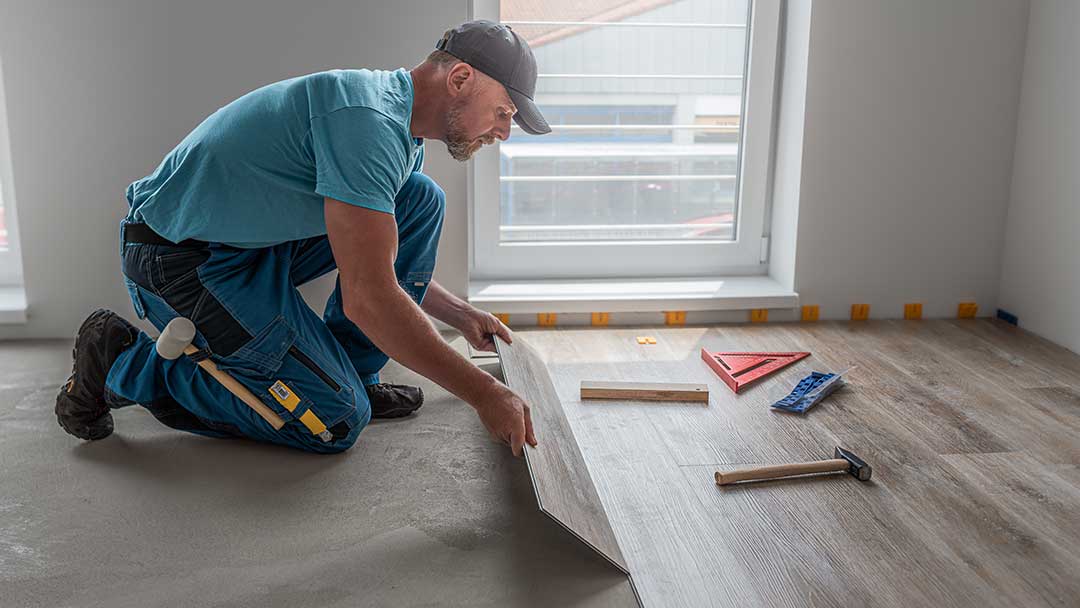
- Structurally sound and reasonably level
- Free from active leaks or seepage
- Clean and dry according to the flooring instructions
- Checked for moisture when the product requires testing
- Prepared with the correct vapor-control method, if specified
A floating installation may allow limited access for repairs, but water trapped below the flooring can still cause odor or subfloor concerns. Basement moisture should be addressed at its source rather than concealed beneath a new floor.
Does waterproof mean floodproof?
No. Waterproof vinyl plank is not floodproof.
Short-term exposure from a spill, wet boots, or a small plumbing incident is different from prolonged flooding. Floodwater may carry soil, bacteria, chemicals, and other contaminants. It can also saturate drywall, insulation, cabinetry, trim, and the subfloor.
After significant water intrusion, the floor may need to be inspected even if the planks appear undamaged. The most serious damage may be hidden below the surface or around the room perimeter.
Standing water should be removed promptly. Flooring materials and adjacent building components should be dried according to the severity of the incident, with particular care when water has come from a drain backup, sewage source, or unknown source.
Can waterproof vinyl plank be installed over concrete?
Often, yes, but the concrete must meet the flooring requirements.
Concrete can look dry while still releasing moisture vapor. Excess moisture may affect adhesives, underlayment, locking joints, or nearby materials. Some products require moisture testing before installation, especially when the floor is below grade or when adhesive is used.
The surface should also be flat enough for the plank system. Waterproof flooring does not eliminate problems caused by dips, ridges, cracks, loose materials, or movement in the slab. Uneven concrete can place stress on locking joints and lead to separation or noise.
The exact requirements vary by product, so the installation instructions should be followed rather than assuming that all vinyl planks can be installed the same way.
How should water-resistant and waterproof flooring be maintained?
Routine care is straightforward, but maintenance still affects performance.
Clean spills soon after they occur, especially near seams and room edges. Use mats or absorbent runners at exterior doors, but allow them to dry so moisture is not held against the floor. During snowy weather, remove wet footwear and clear tracked-in slush before it spreads.
Avoid flooding the floor with cleaning solution. Excess liquid can move beneath trim or into openings even when the planks are waterproof. Use cleaning products approved for the flooring and avoid abrasive tools that can damage the wear layer.
Heavy furniture should be moved carefully, and protective pads can help reduce dents and scratches. A damaged plank or separated joint should be addressed before repeated moisture reaches the subfloor.
What is the practical answer for homeowners?
Vinyl plank flooring may be waterproof at the plank level, but no flooring system is automatically protected from every moisture problem. It is well suited to many rooms where spills, wet footwear, and routine household moisture are expected.
The most dependable results come from matching the product to the room, preparing the subfloor correctly, following the manufacturer’s installation requirements, and responding quickly to leaks. For basements, bathrooms, laundry areas, and other moisture-prone spaces, the condition of the entire floor assembly matters just as much as the label on the flooring box.